Movie Review: Antichrist

Starring: Willem Dafoe, Charlotte Gainsborg
Written & Directed By: Lars von Trier
Grade: A

Antichrist created quite the stir when it premiered at the Cannes Film Festival. I can understand uneasiness after watching the film, but the massive critical ignorance upon its premiere is somewhat shocking. I understand the average movie viewer getting aggravated with its slow-moving pace, very subtle approach to conveying meaning and its message, and the non-literal nature of the film. The critics who bashed the film, ignoring beautifully artistic visuals, meaningful content, and the massive number of imagery and symbolism and focusing on the brutal violence and sexualizing, either drastically missed the point, and that all of these things compliment each other, or they just decided to penalize it for the horrific, torturous turn the film took. Luckily, the beauty and brilliance of this film has been acknowledged since then.

The film opens on a completely captivating high contrast shot in slow motion black-and-white. From the beginning we get full frontal nudity and penetration between the couple making love to each other (probably the only time they do make love, although there is a massive amount of sex throughout). They are completely engaged with each other and caught up in the moment that they don’t notice their toddler, Nick, stirring. He gets out of his crib and catches them in the act. He turns around and gives an odd, sly smile, but the couple still doesn’t notice. Nick walks through the room as they continue until he gets to the window. He jumps out and slowly falls and falls through the white, wintry sky, until he falls to his death.

This opens the first stage out of the four the film is labeled with; grief. She is horrified and feels incredibly guilty after her son’s death. She has been hospitalized for over a month and put on anti-depressant medication. Her husband is a therapist and believes he knows more than the doctors, even though he isn’t one himself. He gets her to flush her medication and “deal” with the pain head on. He begins doing aggressive therapy exercises, expanding her pain from emotional to physical. She is physically strained and has a number of attacks on her body that he forces her to feel and take it in. She blames him for not truly caring about her or Nick, placing blame on him, while still being overwhelmed with so much of it herself; there is plenty to go around.

He soon finds out where she is most afraid since he can’t find out what she is most afraid of. With great hesitation, she utters the woods, one known as Eden specifically. They enter the very secluded woods where she and Nick were the last summer he was alive. That summer she was working on finishing a book on female genocide, specifically towards those accused of practicing witchcraft. In this time she explores witchcraft and demonic arts and the historical societies thoughts on these to the point where these ideas get implanted in her and become fundamentals in both her pain and struggle for survival.

It is extremely difficult even for her to walk through these woods as she believes nature is evil. Walking across the bridge takes quite a bit out of her. As they work at it more, she actually appears to be getting better. There are still odd, suspicious sounds as nature keeps a sense of suspense and fear present. When He finds her research and that she was not appalled by what happened to these women, but perhaps even supportive, the tables turn.

The performances are incredible. Dafoe and Gainsborg certainly deserve a great deal of praise for their courage, dedication, and readiness to plunge in to a cinematical experience as raw as this one. They make everything feel real, playing their parts well, displaying the emotions or lack there of, and their different sides in the game. Some of the themes wouldn’t have worked nearly as good as they did if they weren’t able to pull off their performances so well. Dafoe manages to be expressive even though a big part of his role is playing the supposedly rational one, stern, calming, and trying to tone down the overwhelming emotion of his partner while being a bit unknowingly arrogant. Gainsborg seems irrational, emotional, pained, grieving, unstable, crazed, angered, fearful, animalistic, and a number of other traits throughout the film. She goes through changes throughout, but many of these coincide with each other at the same time. The two form their character’s opposition well, making the showdown against these two enthralling.

There is a lot here, but one of the strongest themes is that believing nature is inherently evil. This nature encompasses the outside nature that we commonly think of, the things that go bump in the night. In this aspect, Antichrist is one of the best man vs. nature horror films I have seen, it certainly leaves an impact on the viewer. It also encompasses nature in the sense of human nature, specifically females, giving us a powerful critique on misogynistic views, by placing them in our female character more than the male. She begins to believe that women are evil by nature and applying this to herself. It does something to her believing that men, such as her husband, think of her this way. At the same time, by believing this is nature, something ineviatable, she can finally find a release from her guilt. She no longer has to be blamed, it can all be blamed on male perceptions and superiority (which her husband definitely shows in his arrogance). Still, she has blame and anger towards her husband that she needs to release, yet it really isn’t her, it’s just her evil nature.

Our two characters represent opposition: man vs. woman and rationality vs. emotion, being the most prominent. The man vs. female conflict resonates with the wife’s research of historical times, taking us back to the type of logic that was present during the witch hunting days. It was all instinct and emotion, void of any reason. This can be said of the roles placed within men and woman and how they differ. In this case, women are portrayed as being closer to nature, which makes them wicked in this case. Also, man is usually viewed as the stronger and more animalistic of the two, but the roles are reversed here. Embracing the true battle of the sexes, both are brutally attacked in the most fragile place. His penis is bashed and once he is knocked out is clenched and stroked until blood spurts out of it. Even though she is the more aggressive fighter, she knows the evil that she and all woman hold, thus she cannot go unharmed either. She grabs scissors and performs vagina self-mutilation in the single most disturbing moment of the film (I now truly understand why every guy squirms uncontrollably during castration scenes in movies). Men are stereotypically viewed as being more rational while woman have the emotional role. This is true here, but both are dangerously so. Her overpowering emotions leads her to do horrific things, but his insistence on rationality, dealing with her horrible grief head on in his way push her to her unstable state. The two approaches, rationality and emotion fight it out; clearly there will be no compromise.

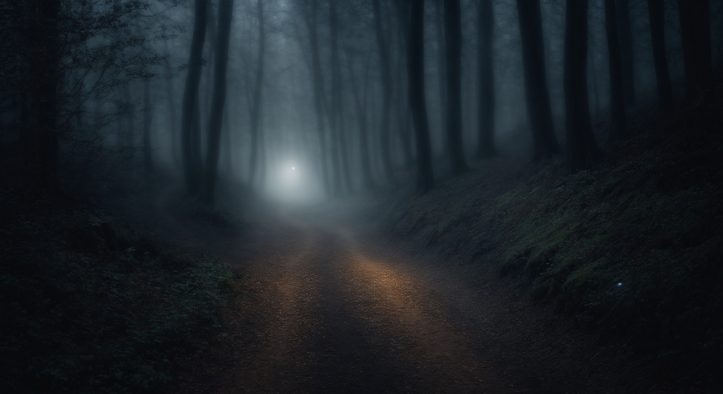
Antichrist starts off with a dramatic, mournful setting and leads us to the classic, secluded cabin in the woods that has become a staple of many horror films. The woods give us a great atmosphere and make us face on the nature head on just as our characters do. The cinematography captures the light and hope while making sure the darkness is truly what dominates. Surprisingly enough, it probably outdoes the amount of nudity and sex than even the film best known example, Friday the 13th. Here, the nudity and sex are raw and wrong, majority of the time, they are more like rape and aggression than any type of sexual pleasure and surely we are miles away from the lovemaking scene we saw at the beginning of the film.

Much of the film is extremely slow paced. It works with just having these two characters, giving us a very intimate look at them, yet having so much mystery and questioning of whether they will be able to move on from what has happened. If the entire film was like this, it would feel lacking, but the end is so strong, relentless, shocking, yet completely fitting, that it ends with a bang and not only do we get the needed pay off in the film, but we have this understanding once we piece it all together of the purpose of all of it.

The gore, along with the two of the most notable and horrifying sequences I mentioned above, is severe and excruciating, but the controversy is a bit out of proportion. It’s only because so much of the film is dramatic and psychological, focusing on relationships, emotions, and approaches that the change of tone and violent turn the film takes is startling. Aside from the first audiences to see this though, most people should know what to expect though. There are some creative attacks and torturing, most of which are pretty new or at least fresh in horror cinema. They show the hate and fear of the witch hunts and the desperation between these two troubled people. Lars von Trier makes films by his own rules, giving us this art house horror film with striking cinematography and inspired stylizations, completely committed performances, and raw sex and violence to explore the evil intentions of one’s nature. Everything in the film is very subtle, but intentionally because von Trier doesn’t want to have to tell his audience this things, he wants them to explore it through their own eyes. There’s so much meaning, care, and insight shown in such a creative and innovative way; exactly what gritty, severe, intense horror movies should hold.

SHARE AND ENJOYThese icons link to social bookmarking sites where readers can share and discover new web pages.
  • bloodee
  • del.icio.us
  • digg
  • Fark
  • Furl
  • Netscape
  • NewsVine
  • Reddit
  • YahooMyWeb

1 Response to “Movie Review: Antichrist”


  1. 1 Kartikey Nov 23rd, 2009 at 4:06 am

    Very good prose!

Leave a Reply